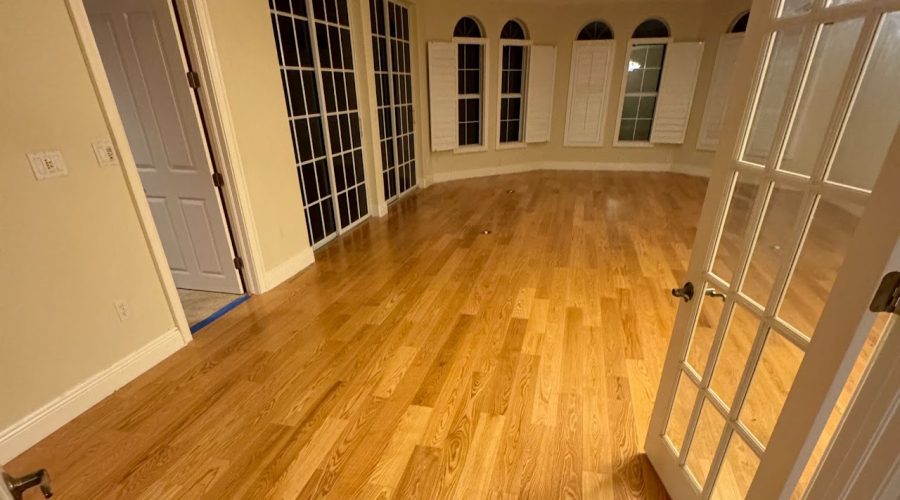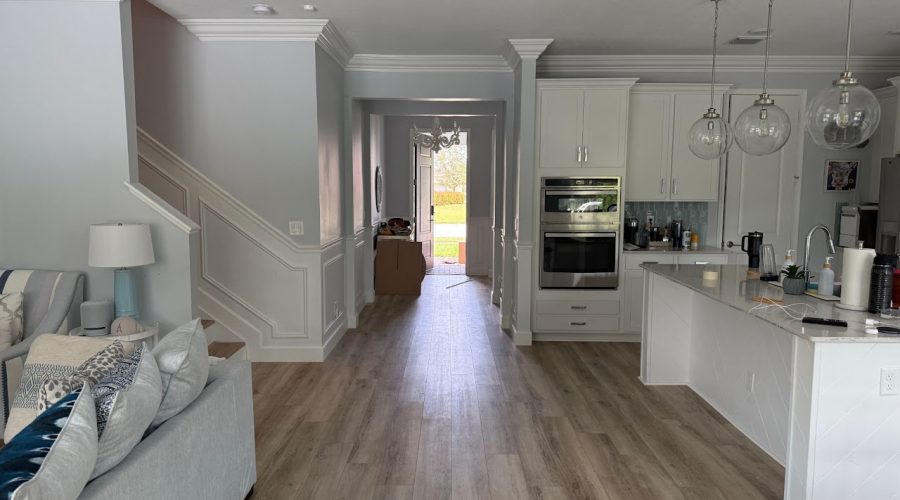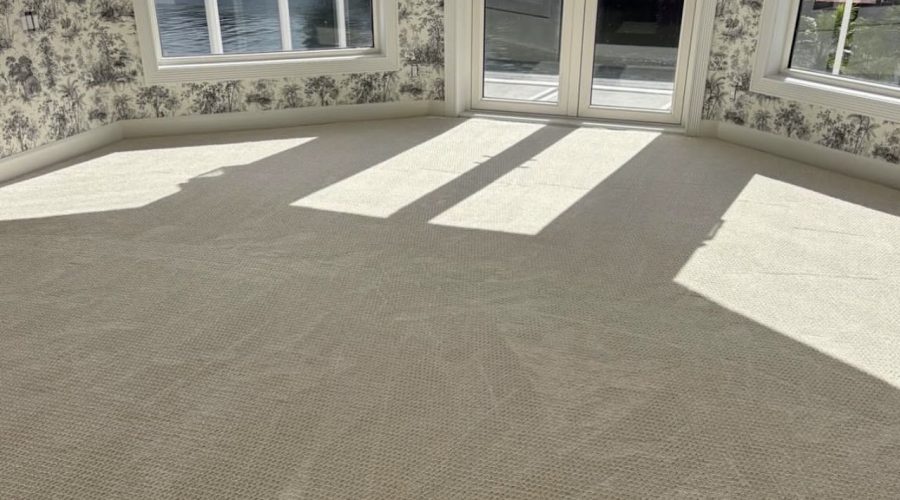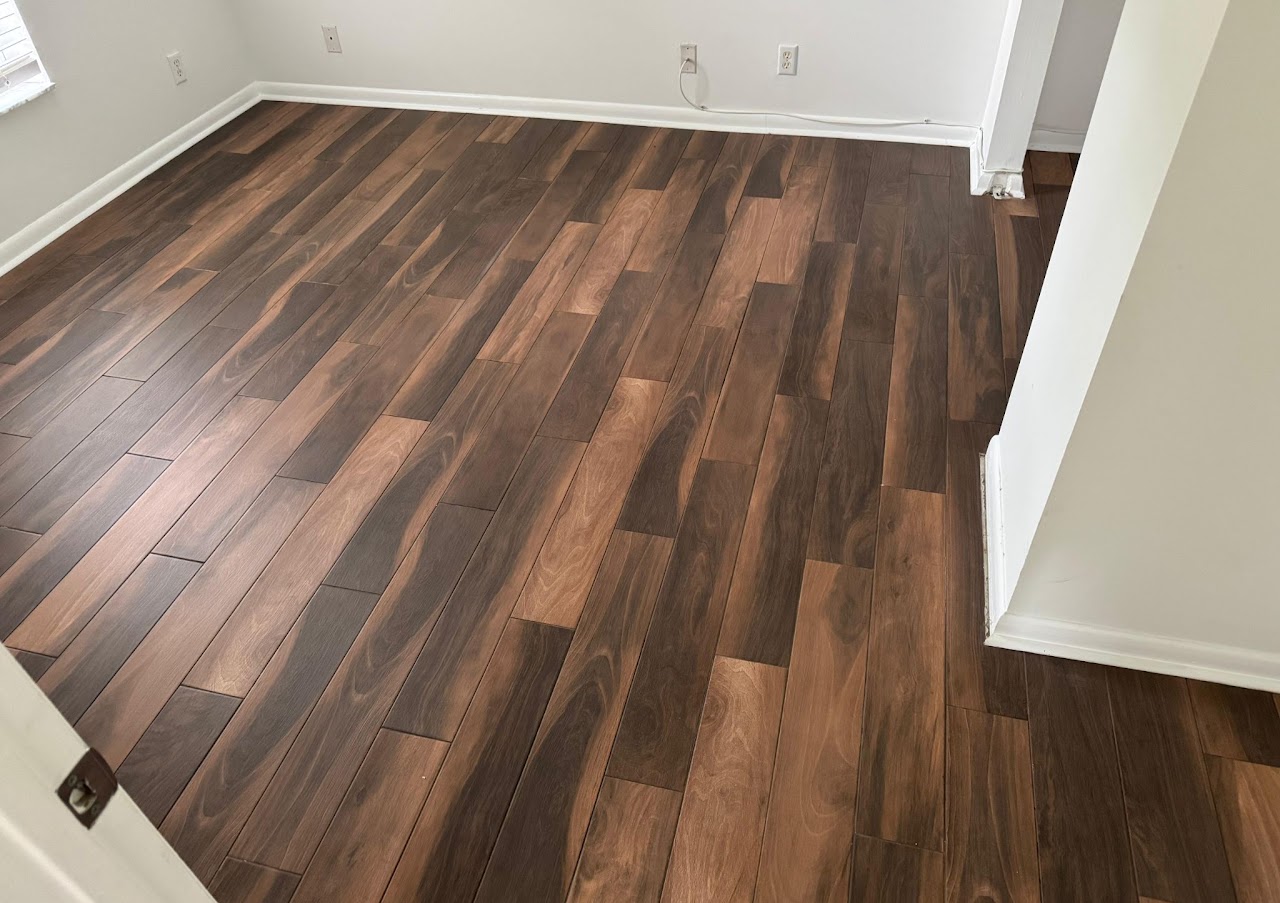

It is the first question almost everyone asks, and the honest answer is the one nobody wants to hear. It depends on the space.
That is not evasion. Two houses of identical size in the same Miami neighborhood can produce estimates that differ substantially, because what sits under the floor differs. What this article does instead of quoting a number is explain exactly what builds the price, so that when you receive an estimate you can read it properly and compare it fairly.
Flooring is priced by the square foot, and the measurement that matters is the actual installed area, not the square footage on your property listing. Closets, hallways and irregular rooms all count, and a small amount of extra material is always required for cuts and waste.
This is the part most people focus on, and it does move the number. Broadly, from most affordable upward, you are looking at carpet and laminate, then luxury vinyl plank, then tile, then engineered hardwood, with solid hardwood and natural stone at the top.
Within each of those categories the range is wide. Two vinyl plank products can differ considerably depending on the wear layer thickness and core construction. That difference is not cosmetic, it determines how long the floor lasts.
This is the item that surprises people, and in Miami it is frequently the largest variable in the whole estimate.
Every Miami home sits on a concrete slab. If that slab is flat, clean and dry, preparation is minimal. If it needs leveling, patching, grinding or moisture mitigation, that work is real, it takes time and materials, and it appears on the estimate.
It is also the work you cannot skip. A floor installed over an unprepared slab fails, and then you pay for the flooring twice. Any estimate that does not mention the subfloor at all is an estimate that has not looked at it.
Something is already down, and it has to come up. Carpet is the quickest. Tile is the most demanding, because the tile and the mortar bed beneath it both have to be broken out and hauled away. Glued down vinyl sits in between, since the adhesive has to come off the slab afterward.
In older Miami homes there is often more than one layer, sometimes down to original terrazzo, and that is only discovered once the top layer is off.
Baseboards, thresholds and transitions all form part of a complete job. Beyond that, how the floor is laid matters. A diagonal or herringbone tile layout takes considerably more time and produces more waste than a straight lay. Stairs are their own item entirely, priced by the step rather than the square foot.
Three local conditions affect what a Miami estimate looks like compared with the same job elsewhere.
Slab moisture. Homes built before roughly 1980 frequently sit on slabs poured without a vapor barrier. Where testing shows high readings, a moisture mitigation system is needed before flooring goes down. That is an added cost, and it is the one that protects everything above it.
Building requirements. If you live in a condominium in Brickell, on Miami Beach or in any managed community, your association almost certainly requires a specific sound rating and approved underlayment. That underlayment costs more than the standard alternative and it is not optional.
Access and logistics. A ground floor house is straightforward. A twentieth floor unit with reserved elevator windows and restricted working hours is a different job, and the schedule affects the labor.


A complete flooring estimate should show you these items separately. If it does not, ask.
Material, named specifically, not just tile or vinyl. The product name and specification tell you what you are actually buying.
Installation labor, per square foot.
Removal and disposal of the existing floor.
Subfloor preparation, and what it involves for your slab.
Moisture mitigation, if testing indicates it is needed.
Underlayment, and whether it meets any building requirement you are subject to.
Baseboards, thresholds and transitions.
Stairs, priced separately if applicable.
When one estimate comes in noticeably below the others, it is worth asking what is missing rather than assuming you found a bargain. Usually one of these is the reason.
Subfloor preparation is not included. The slab has not been assessed, and preparation gets added later or skipped entirely.
Removal and disposal are excluded. You find out on the day that taking up the old floor is a separate charge.
A thinner or lower specification material. Two vinyl plank floors can look identical in a showroom and behave completely differently after five years of traffic.
Baseboards are not in the price. The floor goes down and the perimeter gap stays visible until you pay someone else to close it.
No license or insurance. The cheapest quote in any trade usually comes from whoever carries the least overhead, and licensing and insurance are overhead. If something goes wrong in your home, that distinction becomes the whole story.
There are sensible ways to reduce a flooring budget, and they are not the ones people usually reach for.
Do the whole area at once. Mobilising a crew, delivering material and setting up costs the same whether you do one room or five. Doing the house in stages over three years costs more in total than doing it in one go.
Match the material to the room. You do not need the same specification everywhere. A hardwearing floor in the entryway and hallway, something more economical in the guest bedroom, is a perfectly reasonable plan.
Choose a simple layout. A straight lay uses less material and less labor than a diagonal or herringbone pattern.
Keep existing baseboards if they are in good condition. Sometimes they can be removed carefully and reinstalled. Whether that works depends on their condition and on whether the new floor sits at a different height.
Repair instead of replacing where it makes sense. If the problem is one damaged area or a carpet with ripples, a spot repair or restretching costs a fraction of a new floor.
Skipping subfloor preparation. The most expensive decision available in Florida flooring. The floor fails and the whole job is done again.
Skipping moisture mitigation on a slab that needs it. Same outcome, on a slower timescale.
Choosing the wrong material for the room. Laminate in a bathroom, solid hardwood on a ground floor slab. Both fail, both predictably.
Buying the thinnest wear layer available. It looks the same on day one and it does not look the same after four years of traffic.
Nobody can price a floor accurately from a phone call, and anyone who does is quoting a number they will revise later.
A free in home estimate means we come out, measure the actual space, look at what is currently down, assess the condition of the slab, and go over material options with you in the room they are going into rather than under showroom lighting.
You get a price based on your house, not on an average. There is no charge and no obligation.
Not an accurate one. The two biggest variables in any Miami estimate are the condition of your slab and what is currently installed over it, and neither can be assessed without seeing them. We can talk through options on the phone and then come out to measure.
Your estimate is based on what we find when we inspect the space, including the condition of the subfloor, so you know what is involved before any work begins. What varies is how much preparation your particular slab needs.
Removal and disposal is part of what we do, and it appears as an item in the estimate. How much work it represents depends on the material coming up, since tile takes considerably more effort than carpet.
Value is cost divided by years of service. Tile lasts the longest and is unaffected by water. Luxury vinyl plank is the best balance of price, durability and moisture resistance for most Miami homes. The cheapest floor to install is rarely the cheapest floor to own.
Usually because they include different things. Compare what each one covers, particularly subfloor preparation, removal, underlayment and baseboards, before comparing the totals. An estimate that leaves out preparation is not cheaper, it is incomplete.
We install and repair every type of flooring across Miami-Dade, Broward and Palm Beach counties, and we handle the whole job, from removal and subfloor preparation through installation and baseboards.
Call (786) 720-7328 or request your free estimate and we will measure your space and give you a price you can rely on.
Call us or send a quick request online.
We measure on site and help you choose.
Our licensed team installs your new floor.
We check every detail together before we leave.
Our skilled team has years of experience in residential and commercial flooring projects.
We use top-grade products for long-lasting beauty, strength, and durability.
From start to finish, we deliver timely, clear, and dependable service every time.